The Art Direction of the Noguchi Museum, 2018–


PUBLICATION: The Shape of a Circle in the Mind of a Fish
Edited by Lucia Pietroiusti and Filipa Ramos
Design by Giles Round
Published by Serpentine & Hatje Cantz
English
June 2025, 408 Pages
Paperback
190mm x 253mm
ISBN:978-3-7757-5575-7
p. 18
Installation view: The Shape of a Circle in the Mind of a Fish with Plants, EartH Hackney, London, 2019. Art Direction: Giles Round. Photograph © Talie Rose Eigeland.
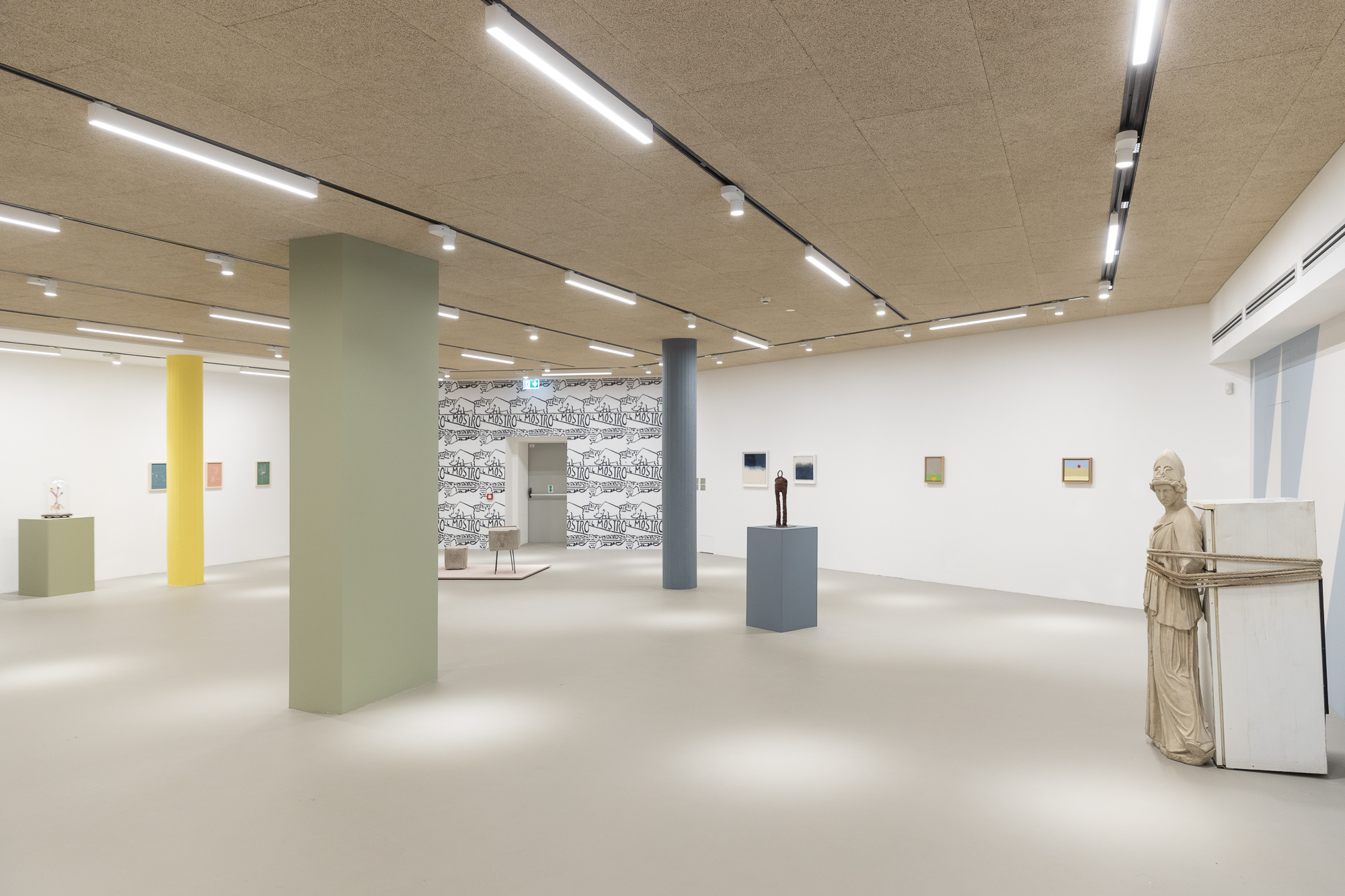
Installation view: The Shape of a Circle in the Mind of a Fish, Part 2: we have never been one, Ambika P3, London, 2018. Art Direction: Giles Round.Photograph © Plastiques Photography.
pp. 21-22
Installation view: The Shape of a Circle in the Mind of a Fish, Part 2: we have never been one, Ambika P3, London, 2018. Art Direction: Giles Round. Photograph © Plastiques Photography.

The Art Direction of the Noguchi Museum
Giles Round
How does it sound in the courtyard when the wind rustles the leaves in the trees?
Giles Round’s The Art Direction of the Noguchi Museum (2018–ongoing) is titled after Isamu Noguchi’s (1904–1988) eponymous museum, which the artist created and designed to present his own work. It takes Noguchi’s dilution of boundaries between artistic disciplines as a reference for a medium and a practice, conceived as a whole. Direction is conceived of as a vector, a perspective, a line of fugue, an atmosphere and a tone given to a whole research and body of work. It considers context, history, necessities and setting as correlated entities that determine the ways in which a project is approached, developed and cared for. Round’s ongoing exploration enquires into the role of the artist as an integral part of institutional and design teams, and of society’s infrastructures and organisations at large. Rethinking and actualising Noguchi’s creative spirit and the questions that drove his practice, The Art Direction considers space, form, environment, mood and purpose as equally fundamental coordinates for an artistic outcome.
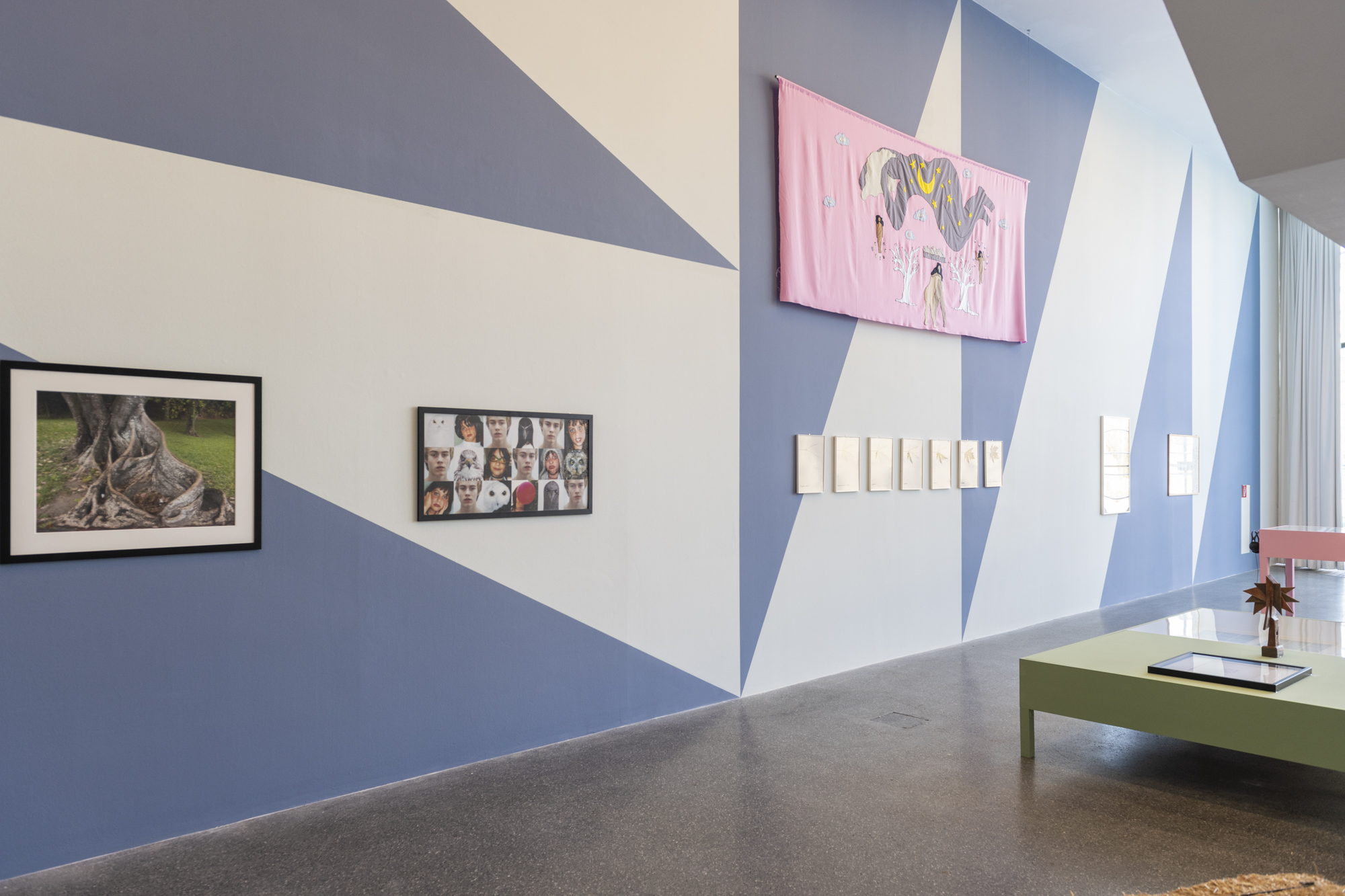
For the Wellcome Collection, Round realised Colour Palette: Living with Buildings (2018). Embedding himself within the design teams of the Wellcome, he proposed a colour palette, drawn from his own research into the effect of colour on health, which became an integral part of the exhibition design. For the 8th Biennale Gherdeïna (2022), Round worked, together with South Tyrolian designers hund, to conceive the project’s image and graphic identity. The choice of the colour palette and the geometric symbols used in the Biennale’s identity were drawn from walks through the forest and the town, as well as research into the Val Gardena’s industrial and residential architecture.
With this methodology, Giles Round was artist in residence with Serpentine’s General Ecology project, in charge of the project’s art direction. This included the art direction of every edition of The Shape of a Circle in the Mind of a Fish, inclusive of a suite of graphic identities developed with marbling techniques, as well as low-impact spatial design elements, the light design for The Shape of a Circle in the Mind of a Fish with Plants at EartH Hackney, and a graphic suite of wayfinding panels for we have never been one.
Colour Palette, Persones Persons, 2022
Colour Palette devised for Biennale Gherdëina 8
Dimension Variable
Factories, Mountains, Trees, 2022
Wall paintings for Welcoming Persones, Persons & Persones, Persons
Dimension Variable
Exhibition views: Museion, Bolzano & Salle Trenker, Ortisei
Photography by Luca Meneghel, Tiberio Sorvillo & Giles Round


Working together, graphic designers hund and Giles Round developed the graphic identity of the Biennale Gherdëina ∞. Graphic elements such
as the colour palette and a suite of geometric symbols were drawn from walks through the forest and the town, as well as from research into
Val Gardena’s industrial and residential architecture. Taking inspiration from the traditional ornaments to be found on the architecture in Ortisei and fascinated by the lunar myths of the Monti Pallidi – the name of the Dolomites in Fanes Saga mythology – the process led them to conceive a visual system. Focusing on lunar phases and the Gregorian calendar as markers of time, colours and symbols encode this information into a cipher.